How to Build Body Confidence After 50
How to Build Confidence and Trust in Your Body After 50

Have You Lost Confidence in Your Body?
Our bodies change as we age. We all know that.
Personally, I loved running. I loved the rhythm, the way it cleared my mind, and how it made me feel physically, emotionally, and mentally.
But I also love my left knee—and my knee decided running, and sometimes even walking fast, were on the "not right now" list.
Suddenly, I found myself being more cautious on the stairs. I hesitated during yoga and balance exercises. I was slower and more careful getting up from the floor.
My confidence—and my desire to do some of the activities I loved—started to dwindle.
So I started physical therapy, created joint-friendly exercise routines, and slowly, one day at a time, began rebuilding my confidence. Eventually, I tried walking fast again. Then I started jogging. I returned to yoga and balance exercises.
Honestly, I still take the stairs with a little hesitation.
How about you?
Did you used to do something without thinking about it, but now you hesitate?
Maybe it's walking down the stairs, navigating an uneven sidewalk, getting up from the floor, carrying groceries, or trying a new exercise.
That's what I mean by confidence in your body.
It's not about looking a certain way or being fearless. It's about trusting yourself to move safely, handle everyday challenges, recover when movement doesn't go perfectly, and keep doing the things that matter to you.
It's that little voice that says:
"I've got this."
I work with people every day who have experienced a fall, injury, illness, or other change that caused their confidence—and their activity level—to drop.
Here's the good news:
Confidence isn't something you either have or don't have. You can build it.
Why Confidence Can Change as We Get Older
Strength, balance, mobility, and reaction time can change as we age. A previous injury, illness, inactivity, or simply avoiding activities you're unsure about can also affect your confidence.
Sometimes the fear of falling or getting hurt causes us to move less. And when we move less, we may lose some of the strength, mobility, and balance that help us feel confident in the first place.
It's easy to get caught in that cycle.
The good news? These are areas we can work on.
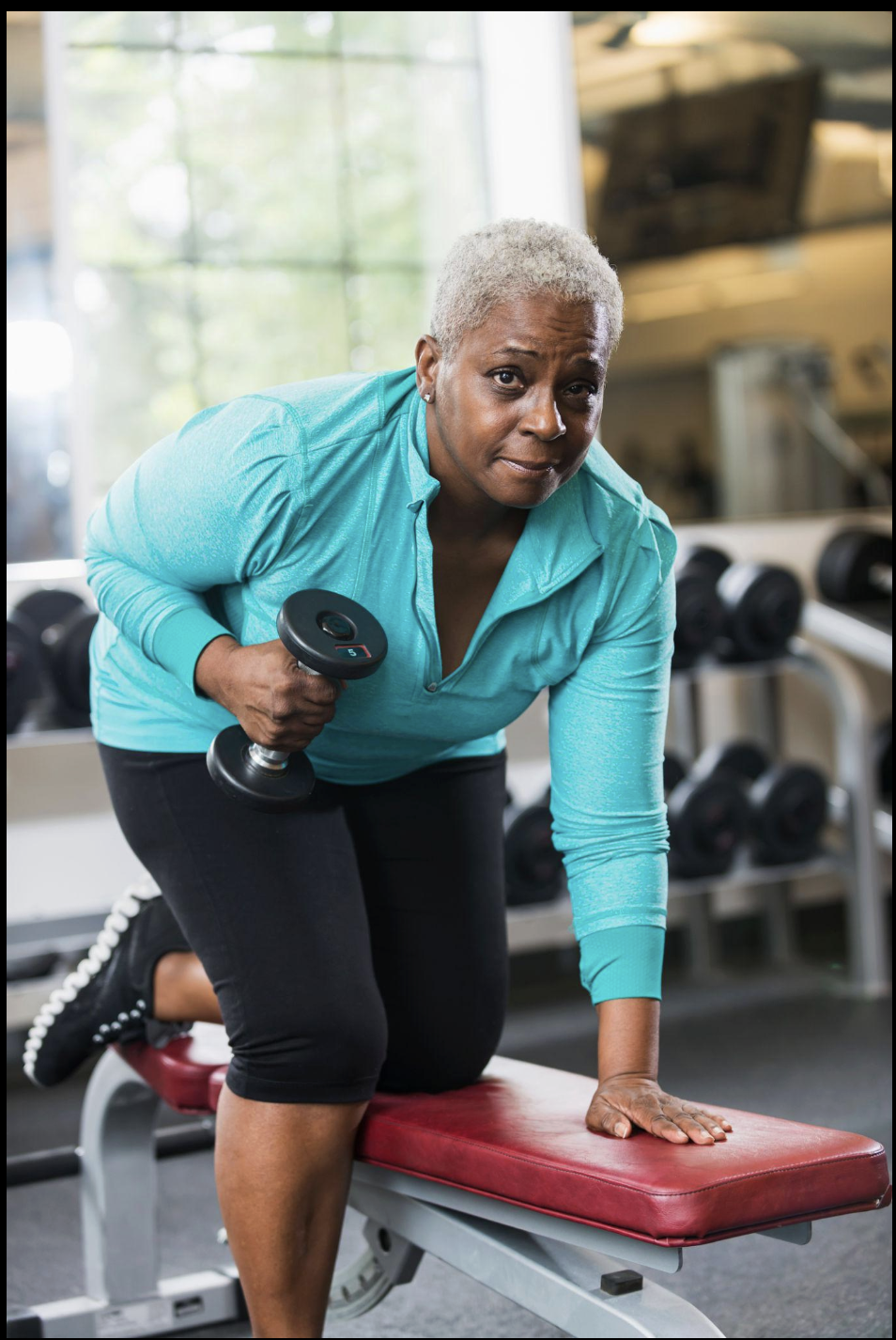
The Confidence Connection: Strength + Mobility + Balance
Let's look at why strength, mobility, and balance matter.
Strength helps you climb stairs, get up from a chair, carry groceries, and perform the everyday tasks you need to do.
Mobility helps you move through the range of motion needed for reaching, bending, turning, walking, and other daily activities.
Balance helps you stay steady and respond when your environment changes.
These aren't separate skills.
They work together every time you move through daily life.
Confidence Comes From Consistent Practice, Not Perfection
Consistent practice is one of the keys to building confidence.
And consistency doesn't have to mean every day.
For many adults, working on strength, mobility, and balance 2–3 times a week can be a realistic goal that provides enough practice while still fitting into a busy schedule.
But if you're just getting started, start with once a week. After a couple of weeks, if you're feeling good, add another day. Gradually build from there.
The goal is to create a routine you can maintain—not to do so much that you get discouraged, overly sore, or injured.
The pattern is simple:
Practice → Improvement → More Trust → More Confidence → More Activity
The more you practice, the more familiar and capable you become. That improvement builds trust in your body—and that trust can give you the confidence to do more of the things you enjoy.
For example:
Practicing 5–10 sit-to-stands can make getting out of a chair feel easier.
Practicing a 10–30 second balance exercise can help you feel more comfortable walking on uneven ground.
Strength training can make carrying groceries feel more manageable.
Mobility work can make reaching, turning, and bending easier.
You don't have to be perfect.
You just need to practice.

A Real-Life Example: "Those Don't Look Very Stable!"
During one of my balance classes, a participant pointed to one of the stability balls on the wall and asked me what it was called.
I told him, "It's a stability ball."
He responded, "Those don't look very stable!"
We laughed because he was right. A stability ball can help you develop stability, but on its own, it certainly isn't stable!
We placed the ball on a base, and he sat down on it. He wiggled and wobbled but was able to maintain his balance with assistance.
Then we started practicing how to move on the ball while maintaining control.
That's the goal—not to avoid every situation where your body might feel unstable, but to learn how to respond and regain control when it happens.
Think about an uneven sidewalk, a pothole, a curb, or an object on the ground you didn't see.
Over time, we added different movements that changed his position on the ball and challenged his balance:
Pelvic tilts
Trunk rotations
Calf raises
Knee lifts
Kicks
With each new challenge, he had an opportunity to practice controlling his body and build a little more confidence.
Trying something new in a safe, supportive environment can help you trust your body again.
5 Simple Ways to Start Building Confidence
1. Practice balance regularly
Even a few minutes can become a valuable habit.
2. Strengthen the movements you use every day
Squatting, hinging, pushing, pulling, carrying, and stepping all help prepare your body for everyday activities.
3. Keep moving through comfortable ranges of motion
Mobility doesn't have to mean an elaborate stretching routine. Regular, comfortable movement counts.
4. Challenge yourself gradually
You don't have to go from "I'm nervous" to "I'm an expert."
Small, manageable challenges allow you to practice, improve, and build trust along the way.
5. Notice what you CAN do
Pay attention to your progress instead of focusing only on your limitations.
Maybe you can stand up from a chair more easily. Maybe you feel steadier on the stairs. Maybe you're willing to try an exercise you avoided a month ago.
Those are wins.
Start With One Small Challenge
This week, choose one activity you want to feel more confident doing.
Ask yourself:
What makes it challenging right now?
Is it strength, balance, mobility—or a combination?
What's one small exercise or habit that could help?
Then practice that one thing consistently for a week.
Remember, consistency doesn't have to mean every day.
Decide how many times you realistically want to complete the activity and commit to that goal.
Tip: Behavior change studies show when setting a goal, having a confidence level of 7/10 that you can accomplish your goal increases the likelihood of success. So, if you're not at least 70% confident that you can complete your goal, make it smaller.
Once you consistently meet that goal, you can build from there.
Small actions lead to big results.
Overcommitting can lead to disappointment and make it harder to stay motivated.
Ready to Build More Confidence in Your Everyday Movement?
The 21-Day Active Aging Strength & Mobility Jumpstart gives you simple, manageable steps to help you get moving, build strength and mobility, and create a stronger foundation for the years ahead.
Click here to learn more about the Jumpstart.
Want practical tips delivered to your inbox? Subscribe to the About Time to Thrive newsletter for simple strategies to help you stay strong, steady, mobile, and independent.
Subscribe to About Time to Thrive.